Struts 2的拦截器(Interceptor)与实例说明
Interceptor(以下译为拦截器)是Struts 2的一个强有力的工具,有许多功能(feature)都是构建于它之上,如国际化、转换器,校验等。
什么是拦截器 拦截器,在AOP(Aspect-Oriented Programming)中用于在某个方法或字段被访问之前,进行拦截然后在之前或之后加入某些操作。拦截是AOP的一种实现策略。
在Webwork的中文文档的解释为——拦截器是动态拦截Action调用的对象。它提供了一种机制可以使开发者可以定义在一个action执行的前后执行的代码,也可以在一个action执行前阻止其执行。同时也是提供了一种可以提取action中可重用的部分的方式。
谈到拦截器,还有一个词大家应该知道——拦截器链(Interceptor Chain,在Struts 2中称为拦截器栈Interceptor Stack)。拦截器链就是将拦截器按一定的顺序联结成一条链。在访问被拦截的方法或字段时,拦截器链中的拦截器就会按其之前定义的顺序被调用。
实现原理 Struts 2的拦截器实现相对简单。当请求到达Struts 2的ServletDispatcher时,Struts 2会查找配置文件,并根据其配置实例化相对的拦截器对象,然后串成一个列表(list),最后一个一个地调用列表中的拦截器,如图1所示。
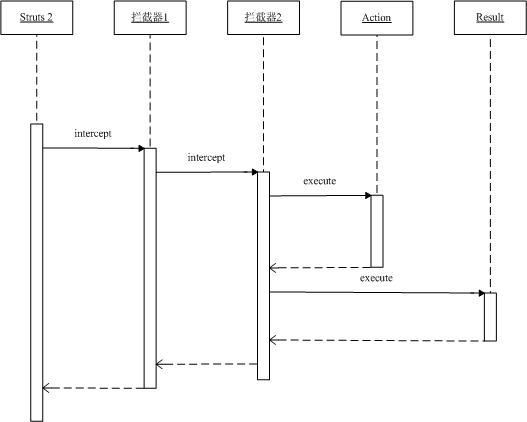
已有的拦截器 Struts 2已经为您提供丰富多样的,功能齐全的拦截器实现。大家可以到struts2-all-2.0.1.jar或struts2-core-2.0.1.jar包的struts-default.xml查看关于默认的拦截器与拦截器链的配置。
在本文使用是Struts 2的最新发布版本2.0.1。需要下载的朋友请点击以下链接: http://apache.justdn.org/struts/binaries/struts-2.0.1-all.zip
以下部分就是从struts-default.xml文件摘取的内容:
< interceptor name ="alias" class ="com.opensymphony.xwork2.interceptor.AliasInterceptor" /> < interceptor name ="autowiring" class ="com.opensymphony.xwork2.spring.interceptor.ActionAutowiringInterceptor" /> < interceptor name ="chain" class ="com.opensymphony.xwork2.interceptor.ChainingInterceptor" /> < interceptor name ="conversionError" class ="org.apache.struts2.interceptor.StrutsConversionErrorInterceptor" /> < interceptor name ="createSession" class ="org.apache.struts2.interceptor.CreateSessionInterceptor" /> < interceptor name ="debugging" class ="org.apache.struts2.interceptor.debugging.DebuggingInterceptor" /> < interceptor name ="external-ref" class ="com.opensymphony.xwork2.interceptor.ExternalReferencesInterceptor" /> < interceptor name ="execAndWait" class ="org.apache.struts2.interceptor.ExecuteAndWaitInterceptor" /> < interceptor name ="exception" class ="com.opensymphony.xwork2.interceptor.ExceptionMappingInterceptor" /> < interceptor name ="fileUpload" class ="org.apache.struts2.interceptor.FileUploadInterceptor" /> < interceptor name ="i18n" class ="com.opensymphony.xwork2.interceptor.I18nInterceptor" /> < interceptor name ="logger" class ="com.opensymphony.xwork2.interceptor.LoggingInterceptor" /> < interceptor name ="model-driven" class ="com.opensymphony.xwork2.interceptor.ModelDrivenInterceptor" /> < interceptor name ="scoped-model-driven" class ="com.opensymphony.xwork2.interceptor.ScopedModelDrivenInterceptor" /> < interceptor name ="params" class ="com.opensymphony.xwork2.interceptor.ParametersInterceptor" /> < interceptor name ="prepare" class ="com.opensymphony.xwork2.interceptor.PrepareInterceptor" /> < interceptor name ="static-params" class ="com.opensymphony.xwork2.interceptor.StaticParametersInterceptor" /> < interceptor name ="scope" class ="org.apache.struts2.interceptor.ScopeInterceptor" /> < interceptor name ="servlet-config" class ="org.apache.struts2.interceptor.ServletConfigInterceptor" /> < interceptor name ="sessionAutowiring" class ="org.apache.struts2.spring.interceptor.SessionContextAutowiringInterceptor" /> < interceptor name ="timer" class ="com.opensymphony.xwork2.interceptor.TimerInterceptor" /> < interceptor name ="token" class ="org.apache.struts2.interceptor.TokenInterceptor" /> < interceptor name ="token-session" class ="org.apache.struts2.interceptor.TokenSessionStoreInterceptor" /> < interceptor name ="validation" class ="com.opensymphony.xwork2.validator.ValidationInterceptor" /> < interceptor name ="workflow" class ="com.opensymphony.xwork2.interceptor.DefaultWorkflowInterceptor" /> < interceptor name ="store" class ="org.apache.struts2.interceptor.MessageStoreInterceptor" /> < interceptor name ="checkbox" class ="org.apache.struts2.interceptor.CheckboxInterceptor" /> < interceptor name ="profiling" class ="org.apache.struts2.interceptor.ProfilingActivationInterceptor" /> 配置和使用拦截器 在struts-default.xml中已经配置了以上的拦截器。如果您想要使用上述拦截器,只需要在应用程序struts.xml文件中通过“”将struts-default.xml文件包含进来,并继承其中的struts-default包(package),最后在定义Action时,使用“”引用拦截器或拦截器栈(interceptor stack)。一旦您继承了struts-default包(package),所有Action都会调用拦截器栈 ——defaultStack。当然,在Action配置中加入“”可以覆盖defaultStack。
下面是关于拦截器timer使用的例子。首先,新建Action类tuotrial/TimerInterceptorAction.java,内容如下:
package tutorial;
import com.opensymphony.xwork2.ActionSupport;
public class TimerInterceptorAction extends ActionSupport { @Override public String execute() { try { // 模拟耗时的操作 Thread.sleep( 500 ); } catch (Exception e) { e.printStackTrace(); } return SUCCESS; } } 配置Action,名为Timer,配置文件如下:
<! DOCTYPE struts PUBLIC
"-//Apache Software Foundation//DTD Struts Configuration 2.0//EN"
"http://struts.apache.org/dtds/struts-2.0.dtd" >
< struts >
< include file ="struts-default.xml" />
< package name ="InterceptorDemo" extends ="struts-default" >
< action name ="Timer" class ="tutorial.TimerInterceptorAction" >
< interceptor-ref name ="timer" />
< result > /Timer.jsp </ result >
</ action >
</ package >
</ struts >
至于Timer.jsp可以随意写些什么到里面。发布运行应用程序,在浏览器的地址栏键入http://localhost:8080/Struts2_Interceptor/Timer.action,在出现Timer.jsp页面后,查看服务器的后台输出。